ADVERTISEMENT
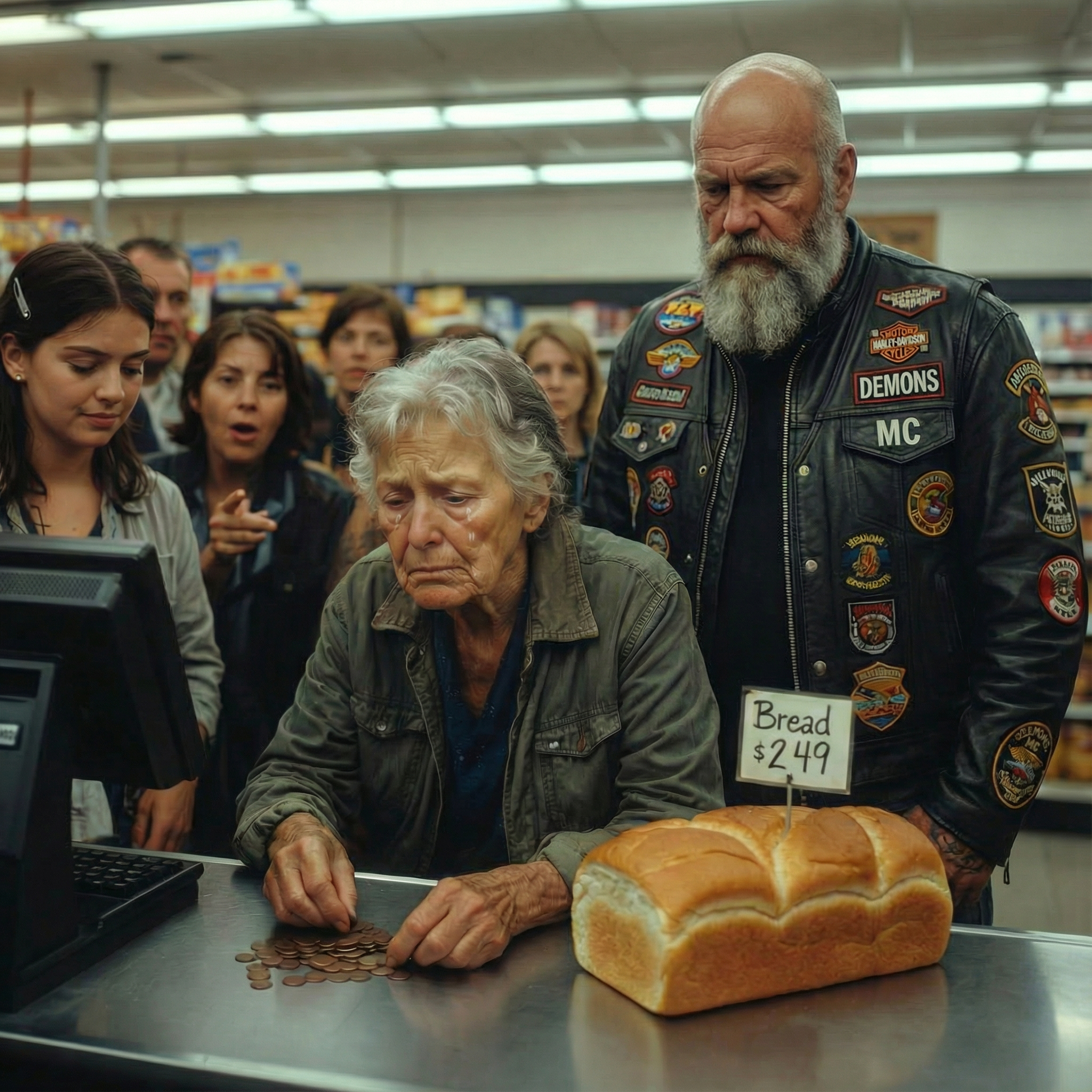
I drove her home. Slowly and carefully, making sure none of her groceries fell. Her apartment was small and clean and sad. Photos everywhere of people who were gone. Her husband. Her son. Her parents and siblings who died in the camps.
“This is my family,” she said, showing me a faded photo of a large group. “Thirty-seven people. I’m the only one who survived.”
“You know,” she said while she ate, “you remind me of someone. A soldier who liberated our camp. Big man. Scary-looking. All the other prisoners were afraid of him. But he was so gentle. He carried the sick ones to the medical tents himself. Cried while he did it.”
“American soldier?”
“Yes. From Texas, he said. He gave me chocolate. First chocolate I’d had in three years.” She smiled at the memory. “He told me to live a good life. To prove that Hitler didn’t win. I’ve tried to do that. Every day for seventy years.”
We sat in silence for a while. Me and this tiny woman who’d seen more horror than I could imagine. Finally, she spoke again.
“Why did you do this? Tell me the real reason.”
I thought about it. Thought about my own mother, who’d died alone because I was too busy to visit. Thought about all the times I’d walked past people who needed help because it wasn’t my problem. Thought about the man I’d been and the man I wanted to be.
“Because I was raised to protect people who can’t protect themselves,” I said. “Because you deserve better than what happened today. And because if I’d walked out of that store without helping you, I couldn’t have lived with myself.”
Eva reached over and took my hand. Her skin was paper-thin. I could feel every bone.
I went back to visit Eva the next week. And the week after that. Every Sunday afternoon for three hours. I’d bring groceries, fix things around her apartment, listen to her stories.
She told me about her childhood in Poland. About her mother’s cooking. About the boy she’d loved before the war, who died in the camps. About meeting her husband in a displaced persons camp after liberation. About coming to America with nothing and building a life.
I told her about my own life. My failed marriages. My estranged daughter who thought I was a deadbeat. My years of running from responsibility. The club that had become my family when my real family wanted nothing to do with me.
“You should call your daughter,” Eva told me one Sunday. “Life is too short for grudges.”
“She doesn’t want to hear from me.”
“How do you know? Have you tried?”
I hadn’t. I’d assumed. I’d given up.
