ADVERTISEMENT
A Life Cut Short at 47
Zhou Liang (name changed), 47, worked in a local textile factory. In her youth, she was known as the “factory beauty” — cheerful, confident, and full of energy. After marriage, she led a comfortable, happy life with her husband and friends, enjoying the simple pleasures of family and home-cooked meals.
But over the past year, Liang began to feel unwell. She often felt weak and tired, sometimes unable to get out of bed for an entire day. Her family noticed she was losing weight rapidly, and her complexion had grown pale. When friends urged her to visit the hospital, she brushed it off, insisting she was fine.
Her husband was devastated. “She looked so healthy,” he told doctors, unable to accept the news. “How could this happen so suddenly?”
Despite all medical efforts, Liang passed away shortly after her diagnosis. She was only 47.
The Surprising Role of a Common Spice
To understand what had gone wrong, doctors examined Liang’s daily diet. What they found offered a valuable lesson for families everywhere.
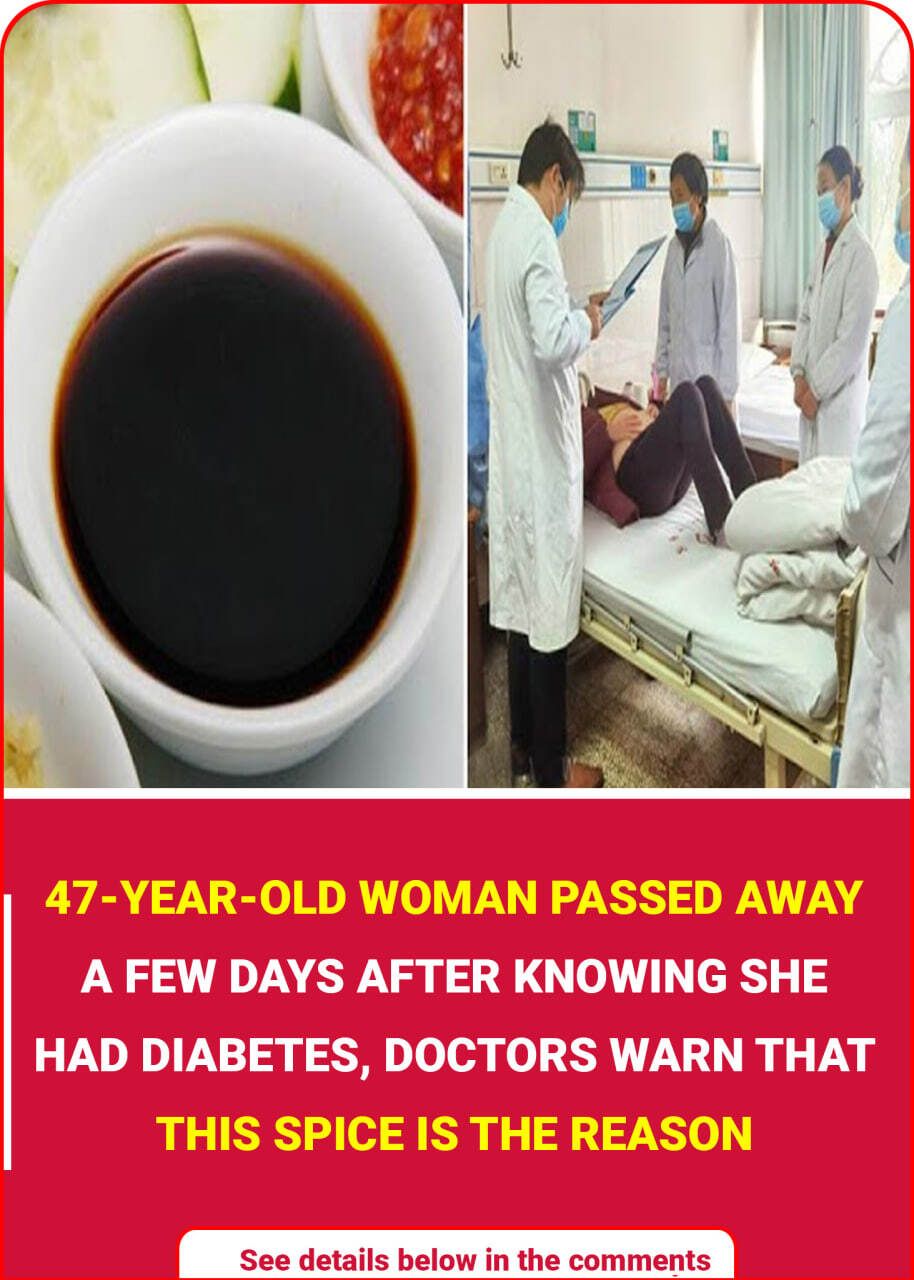
Liang loved to cook. Her favorite ingredient — one she added to nearly every meal — was soy sauce. She used it for stir-fries, soups, marinades, and even poured extra on her rice for flavor.
Soy sauce itself isn’t harmful in moderation. Made from fermented soybeans, wheat, and water, it can add depth and aroma to food. But it’s also very high in sodium. When used excessively, the salt content can overload the body with sodium ions, leading to dehydration, blood pressure fluctuations, and difficulties regulating blood sugar.
For someone with diabetes or prediabetes, this excess sodium can make it harder for the body to use insulin efficiently, allowing glucose levels to rise in the bloodstream. Over time, this contributes to worsening symptoms and potential complications such as kidney strain and cardiovascular stress.
The lesson, doctors emphasized, isn’t that soy sauce must be completely avoided — but rather that balance and moderation are crucial, especially for individuals living with diabetes or high blood pressure.
Foods to Limit for Better Blood Sugar Control
Health experts say that while diabetes management depends on multiple factors — including exercise, medication, and regular checkups — diet plays a vital role. To help keep blood sugar steady, doctors recommend reducing or avoiding the following:
1. High-Sugar Foods and Drinks
2. Refined Grains
White rice, white bread, and pastries lose most of their nutrients and fiber during processing, leaving behind simple carbohydrates that quickly convert to sugar in the bloodstream. Choosing whole grains like brown rice, quinoa, or oats can help slow digestion and maintain more stable glucose levels.
3. High-Fat Meats and Full-Fat Dairy Products
Saturated fats found in processed meats, fried foods, and certain dairy items can increase the risk of both diabetes and heart disease. Health organizations, including the American Diabetes Association, suggest keeping saturated fat intake below 7% of total daily calories.
Common high-fat foods to limit include:
- Fatty cuts of beef, lamb, or pork
- Processed meats such as bacon, sausage, or cold cuts
- Fried chicken or breaded meats
- Whole milk, butter, heavy cream, and rich cheeses like cheddar
Opting for lean proteins — such as fish, skinless poultry, tofu, beans, or lentils — can help protect both heart and blood sugar health.
Building a Healthier Everyday Routine
The story of Zhou Liang serves as a sobering reminder that diabetes doesn’t always announce itself loudly. It can progress silently for years, showing only subtle signs until serious complications appear.
But there’s hope. Simple daily choices — balanced meals, mindful seasoning, regular physical activity, and annual checkups — can dramatically improve quality of life and reduce risks.
For those who love strong flavors, herbs like garlic, ginger, or basil can add taste without excess salt. Reading nutrition labels, using low-sodium soy sauce, and limiting processed foods can also make a meaningful difference over time.
Zhou Liang’s story is heartbreaking, but it’s also a powerful lesson. Health is fragile, and small habits can have great impact — for better or worse. Whether it’s a spoonful of soy sauce or a sugary drink, what we consume daily shapes our future.
For everyone, especially those over 40, it’s not too late to start making mindful choices. Eat fresh, move often, rest well, and see your doctor regularly. Diabetes may be serious, but awareness, moderation, and care can help you live longer — and live well.
ADVERTISEMENT
